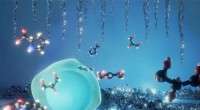
1. Heat Energy: Water molecules are constantly moving. When heat energy is added to water, the molecules move faster and faster.
2. Breaking Bonds: The added energy causes the bonds between water molecules to weaken.
3. Escape from Liquid: As the molecules move faster, some have enough energy to break free from the liquid state and escape into the air as individual water vapor molecules.
4. Vapor: This invisible water vapor is a gas, and it mixes with the air.
Factors Affecting Evaporation:
* Temperature: Higher temperatures mean more heat energy, so evaporation happens faster.
* Surface Area: More surface area exposed to air allows for more water molecules to escape.
* Humidity: The amount of water vapor already in the air influences evaporation. If the air is already saturated with water vapor, evaporation slows down.
* Wind: Wind carries away water vapor molecules, making space for more to evaporate.
Here are some real-world examples of evaporation:
* Puddles drying up: Heat from the sun causes water to evaporate from puddles.
* Clothes drying on a clothesline: Warm air and wind help evaporate water from wet clothes.
* Boiling water: When water is heated to its boiling point, the intense heat causes very rapid evaporation, forming steam.
* Sweating: Our bodies use evaporation to cool down. Sweat evaporates from our skin, taking heat with it.