Simple Structures:
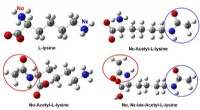
* Molecules: Two or more atoms chemically bonded together. Examples include water (H₂O), carbon dioxide (CO₂), and oxygen (O₂).
* Ions: Atoms that have gained or lost electrons, giving them a net electrical charge. Examples include sodium ions (Na+) and chloride ions (Cl-).
Larger Structures:
* Elements: Pure substances made up of only one type of atom. Examples include gold (Au), carbon (C), and oxygen (O).
* Compounds: Substances formed when two or more elements chemically combine in a fixed ratio. Examples include water (H₂O), table salt (NaCl), and sugar (C₁₂H₂₂O₁₁).
* Macromolecules: Large, complex molecules essential for life. Examples include proteins, carbohydrates, lipids, and nucleic acids.
* Organelles: Specialized structures within cells that perform specific functions. Examples include mitochondria, ribosomes, and the nucleus.
* Cells: The basic building blocks of all living organisms.
* Tissues: Groups of similar cells that work together to perform a specific function.
* Organs: Structures made up of different tissues that work together to perform a specific function.
* Organ Systems: Groups of organs that work together to carry out major bodily functions.
* Organisms: Living beings, such as plants, animals, and fungi.
Beyond the Biological Realm:
* Minerals: Naturally occurring solid materials with a defined chemical composition and crystalline structure.
* Rocks: Solid materials formed by the aggregation of minerals.
* Planets: Celestial bodies formed from the accretion of matter in space.
* Stars: Giant balls of hot, glowing gas that emit light and heat.
In essence, atoms are the fundamental building blocks of everything in the universe, forming the matter that makes up stars, planets, and all living things.