1. Spectroscopy:
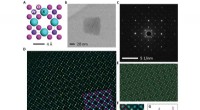
* X-ray Diffraction (XRD): Used to determine the crystal structure of materials by analyzing the diffraction pattern of X-rays passing through a crystal. This technique is crucial in materials science, chemistry, and geology.
* Raman Spectroscopy: Utilizes the scattering of light by molecules to analyze their vibrational modes, providing insights into their chemical composition and structure.
* Neutron Diffraction: Similar to XRD but using neutrons instead of X-rays, particularly useful for studying magnetic materials and hydrogen-containing molecules.
2. Microscopy:
* Electron Diffraction: Exploits the wave-like nature of electrons to create high-resolution images of materials at the atomic scale. This technique is used in materials science and nanotechnology.
* Diffraction-Limited Imaging: In microscopy, diffraction sets the limit on the resolution achievable by lenses. Techniques like super-resolution microscopy attempt to overcome this limit.
3. Communication and Technology:
* Holography: Uses the interference of diffracted light waves to create 3D images. This technology finds applications in security, art, and scientific visualization.
* Optical Fibers: The guiding of light through optical fibers relies on the principle of total internal reflection, which is closely related to diffraction.
* Antennas: The design of antennas for radio waves, microwaves, and other electromagnetic radiation takes into account diffraction effects.
4. Other Applications:
* Diffraction Gratings: Used in spectrometers and lasers to separate light into its component wavelengths.
* CD/DVD Players: Data is stored on CDs and DVDs as pits and lands that act as diffraction gratings.
* Fingerprint Analysis: Fingerprint patterns are analyzed by examining the diffraction patterns of light passing through them.
* Medical Imaging: Ultrasound imaging uses the diffraction of sound waves to create images of internal organs.
* Meteorology: Diffraction patterns observed in the sky, such as halos around the sun or moon, provide information about atmospheric conditions.
These are just a few examples of the diverse applications of diffraction. Its versatility stems from the fundamental nature of wave behavior, making it a powerful tool in various scientific and technological disciplines.