Here's a more detailed explanation:
* Solids: The molecules in solids are tightly packed and vibrate in place. When the temperature rises, the vibrations become more intense, causing the molecules to move slightly further apart, leading to a small increase in volume.
* Liquids: Liquids have more freedom of movement than solids. As temperature increases, the molecules move faster and further apart, resulting in a more significant increase in volume compared to solids.
* Gases: Gases are highly compressible and have much greater distances between molecules. When heated, gas molecules move much faster, leading to a very large increase in volume.
Exceptions:
* Water: Water is an exception to this general rule. Between 0°C and 4°C, the volume of water actually *decreases* as temperature increases. This is due to the unique structure of water molecules, which allows them to form hydrogen bonds.
* Other substances: There are a few other substances, especially some metals, that exhibit similar behavior to water over a small temperature range.
Key takeaway:
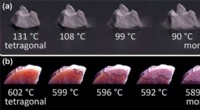
The increase in volume due to temperature changes is generally called thermal expansion. This principle is used in various applications, such as thermometers, bimetallic strips, and engineering designs that account for changes in materials due to temperature variations.