1. Observation:
* Appearance: In some cases, you can visually tell which liquid is denser. For example, oil floats on water because it's less dense. However, this method is not reliable for all liquids.
* Mixing: If you carefully pour two liquids together, the denser liquid will sink to the bottom, while the less dense liquid will float on top. This is how oil and water separate.
2. Experimentation:
* Using a graduated cylinder: Fill a graduated cylinder with the first liquid and note the volume. Carefully pour the second liquid on top of the first. If the second liquid sinks to the bottom, it's denser. Measure the volume of the second liquid added, and divide the mass (weight) of the second liquid by the volume to calculate its density. Repeat this process for the first liquid. The liquid with a higher density is denser.
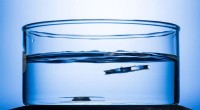
* Using a hydrometer: A hydrometer is a device that measures the density of liquids. It floats higher in denser liquids. Simply place the hydrometer into each liquid and observe the level at which it floats. The higher the reading, the denser the liquid.
3. Calculation:
* Density Formula: Density is calculated by dividing the mass of a substance by its volume. If you know the mass and volume of both liquids, you can calculate their densities and compare them.
Important Note: When comparing densities, ensure you are using the same units for mass and volume (e.g., grams per milliliter).