* Brownian Motion: The random movement of molecules in a solvent is called Brownian motion. This constant jiggling of solvent molecules creates collisions with the solute particles.
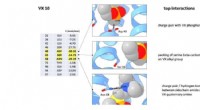
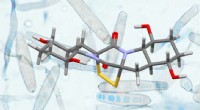
* Solvation: When solvent molecules collide with the solute particles, they can overcome the attractive forces holding the solute together (like ionic bonds or hydrogen bonds). The solvent molecules surround the solute particles, forming a solvation shell and effectively pulling them away from the solid structure.
* Dissolution: As more and more solute particles are surrounded by solvent molecules, the solid structure breaks down and the solute dissolves into the solvent, forming a solution.
Important Note: The rate of dissolution is affected by factors such as:
* Temperature: Higher temperatures increase the kinetic energy of the molecules, leading to more frequent and energetic collisions, accelerating dissolution.
* Surface Area: A larger surface area of the solute allows for more contact with the solvent molecules, speeding up dissolution.
* Stirring: Stirring or agitation brings fresh solvent molecules into contact with the solute, increasing the rate of dissolution.