Condensation refers to the process of a substance changing from its gaseous state to a liquid state. This change occurs when the gas molecules lose energy, typically due to cooling or an increase in pressure.
Here's how condensation plays a role in different scientific disciplines:
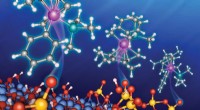
* Chemistry: Condensation reactions involve the formation of a larger molecule from smaller molecules, often with the release of water.
* Physics: Condensation is fundamental to understanding the behavior of gases and liquids, particularly in atmospheric processes.
* Meteorology: Condensation is responsible for cloud formation, precipitation, and many weather phenomena.
* Biology: Condensation is involved in the formation of certain biomolecules like proteins and carbohydrates.
Here are some examples of condensation in different contexts:
* Water vapor in the air condenses on a cold surface, forming droplets of water (dew).
* Steam condenses on a cold window, creating a film of water.
* In a chemical reaction, two molecules condense to form a larger molecule, releasing water as a byproduct.
* During the condensation process in the atmosphere, water vapor cools and forms tiny water droplets, which create clouds.
If you are encountering "condence" in a scientific context, it's essential to clarify what is meant, as it's likely a misspelling of "condensation."