Here's a breakdown:
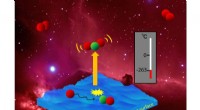
* Random molecular motion: Molecules in a liquid are constantly moving in random directions. Some molecules have enough kinetic energy to overcome the attractive forces holding them in the liquid state and escape into the gas phase.
* Evaporation: This process of molecules escaping from the liquid surface is called evaporation.
* Vapor pressure: The pressure exerted by the vapor molecules in equilibrium with the liquid at a given temperature is called vapor pressure.
Key points:
* Temperature: Higher temperatures lead to higher vapor pressures because more molecules have enough energy to escape.
* Intermolecular forces: Liquids with weaker intermolecular forces (like ethanol) have higher vapor pressures than liquids with stronger intermolecular forces (like water).
* Equilibrium: At a given temperature, evaporation and condensation occur at equal rates, resulting in a dynamic equilibrium between the liquid and its vapor.
Let me know if you'd like more details about any of these concepts!