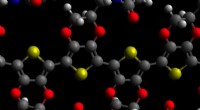
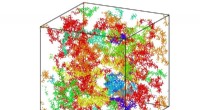
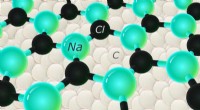
* Atoms and molecules vibrate: All matter is made of tiny particles called atoms and molecules that are constantly vibrating. The higher the temperature of a material, the faster these particles vibrate.
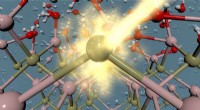
* Energy transfer through collisions: When a hotter object (with faster vibrating particles) comes into contact with a cooler object (with slower vibrating particles), the hotter particles transfer some of their energy to the cooler particles through collisions.
* Vibrational wave: This energy transfer creates a wave of vibrations that travels through the solid, causing the temperature of the cooler object to rise.
Here's a simple analogy:
Imagine a row of marbles lined up on a table. If you push the first marble, it collides with the next one, transferring energy. This continues down the line, causing the marbles to move and eventually, the last marble will also be pushed. Similarly, in a solid, the vibrating atoms and molecules transfer energy through collisions, creating a wave of energy that travels through the material.
Factors Affecting Heat Conduction:
* Material: Different materials conduct heat at different rates. Metals are generally good conductors of heat, while materials like wood and plastic are poor conductors.
* Temperature difference: The greater the temperature difference between the hot and cold objects, the faster heat will be transferred.
* Surface area: A larger surface area in contact will allow for faster heat transfer.
* Thickness: Thicker materials will transfer heat more slowly.
Other ways heat can be transferred in solids:
While conduction is the primary method, heat can also be transferred in solids through:
* Radiation: Some solids, like metals, can emit infrared radiation, which can transfer heat to other objects.
* Convection: If the solid is in contact with a fluid (like air or water), heat can be transferred through convection currents in the fluid.
Let me know if you'd like more details on any of these concepts!