Here's why:
* Energy is used to break or form bonds: During a phase change (like melting ice or boiling water), the energy being added or removed isn't increasing the kinetic energy of the molecules (which would result in a temperature increase). Instead, it's being used to break or form the bonds between molecules, changing the state of matter.
* Latent heat: The energy absorbed or released during a phase change is called latent heat. This energy is "hidden" because it doesn't result in a temperature change, but rather a change in the substance's state.
Example:
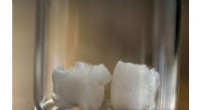
When you heat ice, the temperature rises until it reaches 0°C (32°F). At this point, the ice starts melting. Even though you continue to add heat, the temperature stays at 0°C until all the ice has melted. The energy is being used to break the bonds between the water molecules in the ice, transforming them into liquid water.