1. X-ray Diffraction (XRD):
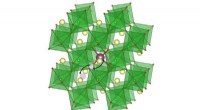
* How it works: X-ray diffraction involves shining X-rays onto a crystalline sample. The atoms in the crystal diffract the X-rays, creating a pattern of spots on a detector. This pattern can be analyzed to determine the arrangement of atoms in the crystal, including the distances between them.
* Limitations: XRD only gives information about the spacing between atoms in a solid state. It doesn't directly measure the size of individual atoms.
2. Electron Diffraction:
* How it works: Similar to XRD, electron diffraction uses a beam of electrons to probe the structure of materials. Electrons interact with the electron clouds of atoms, providing information about the distribution of electrons and the size of the atom.
* Limitations: Electron diffraction is more sensitive to the surface of a material and may not be as precise for determining atomic radii as other methods.
3. Theoretical Calculations:
* How it works: Quantum mechanical calculations can be used to model the behavior of electrons in atoms and molecules. These calculations can provide estimates of the sizes of atoms and ions based on the distribution of electron density.
* Limitations: The accuracy of these calculations depends on the complexity of the system being modeled and the approximations used.
4. Empirical Trends:
* How it works: Scientists have observed trends in atomic and ionic radii across the periodic table. For example, atomic radius generally decreases across a period and increases down a group. These trends can be used to estimate the size of an atom or ion based on its position in the periodic table.
* Limitations: Empirical trends are based on generalizations and may not be accurate for all elements or ions.
Determining Ionic Radii:
* Ionic radii are determined by analyzing the distances between ions in ionic crystals.
* X-ray diffraction is the primary technique used to measure these distances.
* The ionic radius is calculated by subtracting the radius of the other ion from the distance between them.
Important Considerations:
* Atomic and ionic radii are not fixed values. They can vary depending on the chemical environment of the atom or ion.
* The methods used to estimate these values have inherent limitations and uncertainties.
* The values reported for atomic and ionic radii are usually averages obtained from various experimental and theoretical methods.
In summary, there is no single "gold standard" method for determining atomic and ionic radii. Scientists use a combination of experimental techniques, theoretical calculations, and empirical trends to estimate these values, acknowledging the limitations of each method.