Physical Properties:
* Fixed shape: Solids maintain a definite shape. They don't readily flow like liquids or gases.
* Fixed volume: Solids occupy a specific volume and don't easily compress.
* High density: Solids are generally denser than liquids and gases due to their tightly packed particles.
* Rigidity: Solids resist deformation under stress. This means they hold their shape even when force is applied.
* Incompressibility: Solids are difficult to compress because their particles are closely packed.
* Vibrational motion: Particles in solids are tightly bound and can only vibrate around fixed positions.
Molecular Properties:
* Strong intermolecular forces: The particles in solids are held together by strong intermolecular forces, like covalent, ionic, or metallic bonds. This gives them their rigidity.
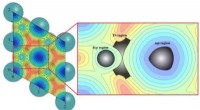
* Ordered arrangement: Solid particles are generally arranged in a regular, repeating pattern called a crystal lattice. This contributes to their fixed shape.
* Limited particle movement: Particles in solids can only vibrate around fixed positions. They cannot move freely as in liquids or gases.
Other characteristics:
* Solid-state physics: The study of solids is a large and complex field with many applications.
* Types of solids: There are many different types of solids, including crystalline solids (e.g., salt, diamonds), amorphous solids (e.g., glass), and metallic solids (e.g., iron, copper).
Let me know if you'd like me to elaborate on any of these characteristics or discuss specific types of solids!