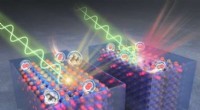
1. It is based on empirical evidence: The atomic theory was not just a random idea. It was developed through observations and experiments. Scientists observed the behavior of matter and noticed patterns, like how substances react in specific ways. This evidence led them to propose the idea of atoms as the building blocks of matter.
2. It can be tested and falsified: The beauty of scientific theories is that they are not set in stone. They are open to being challenged and modified by new evidence. Scientists constantly test the atomic theory through experiments, and if new evidence arises that contradicts the theory, it can be revised or even replaced.
3. It makes predictions: The atomic theory not only explains existing observations, but it also makes predictions about how matter should behave. These predictions can then be tested through further experiments, strengthening or modifying the theory.
4. It is explanatory: The atomic theory provides a framework for understanding the fundamental nature of matter. It explains phenomena like chemical reactions, the properties of different elements, and the states of matter (solid, liquid, gas).
5. It is consistent with other scientific theories: The atomic theory is not an isolated concept. It fits seamlessly with other scientific theories, such as the theory of electromagnetism and quantum mechanics.
In conclusion, the atomic theory is considered a scientific theory because it is based on empirical evidence, can be tested and modified, makes predictions, is explanatory, and is consistent with other scientific theories. It is a constantly evolving framework that helps us understand the world around us.