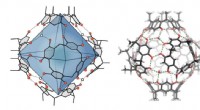
1. Molecular Structure and Bonding:
* Stronger bonds: Materials with stronger atomic bonds (like metals) allow for more efficient transfer of vibrational energy between atoms, leading to higher thermal conductivity.
* Closely packed atoms: Materials with densely packed atoms have more frequent collisions, facilitating heat transfer.
* Free electrons: Metals have free electrons that can readily move and carry heat energy. This is why metals are excellent conductors.
2. Material Properties:
* Density: Denser materials generally have higher thermal conductivity as they have more atoms packed together for heat transfer.
* Phase: Solids generally have higher thermal conductivity than liquids, which have higher conductivity than gases. This is because atoms in solids are closer together and more tightly bound.
* Crystallinity: Crystalline solids with ordered atomic structures tend to have higher thermal conductivity compared to amorphous solids.
3. Temperature and Pressure:
* Temperature: Thermal conductivity generally increases with temperature.
* Pressure: Higher pressure generally results in increased thermal conductivity.
Examples:
* Metals (Copper, Aluminum): Excellent conductors due to their free electrons and strong metallic bonds.
* Diamonds: Have very high thermal conductivity because of their strong covalent bonds and tightly packed carbon atoms.
* Gases (Air): Poor conductors because their atoms are spaced far apart and have weak interactions.
* Insulators (Wood, Plastic): Have low thermal conductivity as they have weak bonds and loosely packed molecules.
In summary: The ability of a material to transfer heat is determined by the strength of its atomic bonds, the density of its atoms, and the presence of free electrons. These factors influence how easily vibrational energy can be transmitted from one atom to another, leading to varying degrees of thermal conductivity.