Here's a breakdown:
* Surface tension is the force that exists at the surface of a liquid, causing it to behave as if it were covered by a stretched elastic membrane. This force arises from the cohesive forces between liquid molecules.
* Cohesive forces are the attractive forces between molecules of the same substance. At the surface of a liquid, molecules are attracted to each other more strongly than to the molecules of the surrounding air or other substances. This creates a "skin" on the surface of the liquid.
* Resistance to spreading is a result of surface tension. It takes energy to stretch the "skin" of a liquid and increase its surface area. This is why liquids tend to minimize their surface area, forming droplets, for example.
Here are some examples of how surface tension affects liquids:
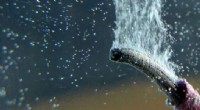
* Water droplets: The spherical shape of water droplets is due to surface tension. The molecules at the surface are pulled inwards, minimizing the surface area.
* Insects walking on water: Some insects can walk on water because their weight is supported by the surface tension of the water.
* Soap bubbles: Soap lowers the surface tension of water, allowing bubbles to form and last longer.
So, while "resistance to spreading" is a good way to describe the effect of surface tension, the actual property is called surface tension.