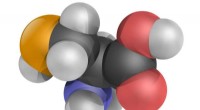
* They don't form perfect geometric shapes like cubes or pyramids. This is because the bonds between carbon atoms are tetrahedral, meaning they form a 3-dimensional shape with four corners, not the straight lines and angles of geometric shapes.
* They also don't form highly polar shapes. This is because carbon and hydrogen have similar electronegativity, meaning they don't form strong dipoles like water does.
Common Shapes of Hydrocarbons
* Linear: Straight chains of carbon atoms.
* Branched: Chains with carbon atoms branching off the main chain.
* Cyclic: Rings of carbon atoms.
* Aromatic: Cyclic structures with alternating single and double bonds.
Important Note: The shapes of hydrocarbons are crucial to their properties. Linear chains are more flexible, while cyclic structures are more rigid. Branched structures can affect boiling point and solubility. Aromatic structures are often very stable.