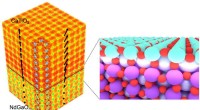
Here are some key characteristics of crystalline substances:
* Ordered Structure: The atoms, molecules, or ions are arranged in a specific, repeating pattern.
* Long-Range Order: This pattern extends throughout the entire crystal.
* Sharp Melting Point: Crystalline substances melt at a specific temperature, unlike amorphous solids which soften over a range of temperatures.
* Anisotropy: They can have different physical properties in different directions. For example, a crystal might be harder in one direction than another.
* Cleavage: They tend to break along specific planes due to the ordered structure.
* Diffraction: X-rays can be diffracted by the regular arrangement of atoms in a crystal, providing information about the crystal structure.
Examples of crystalline substances:
* Salt (NaCl): A classic example of an ionic crystal.
* Quartz (SiO2): A mineral with a tetrahedral arrangement of silicon and oxygen atoms.
* Diamond (C): A covalent network solid with a cubic crystal structure.
* Sugar (C12H22O11): A molecular crystal with a complex but highly ordered structure.
Comparison to Amorphous Substances:
Amorphous substances, like glass, do not have this long-range order and are more disordered. They lack the sharp melting point and other characteristics of crystalline solids.
Understanding the structure and properties of crystalline substances is important in fields like materials science, geology, and chemistry.