Here's why:
* Ra is a widely accepted standard defined by the American Society for Testing and Materials (ASTM).
* Ra measures the arithmetic average of the absolute values of the deviations of the surface profile from the mean line.
* Ra is measured in micrometers (µm) or microinches (µin).
Other units that are sometimes used to describe surface smoothness include:
* Rz (maximum height of profile): Measures the difference between the highest peak and the lowest valley on a surface.
* Rq (root-mean-square roughness): Calculates the square root of the average of the squared deviations of the surface profile from the mean line.
* Rp (peak height): Measures the average height of the peaks above the mean line.
* Rv (valley depth): Measures the average depth of the valleys below the mean line.
Choosing the right unit depends on the specific application and desired level of detail. For example, Ra is often sufficient for general surface roughness evaluation, while Rz might be preferred for applications where the maximum height of the profile is critical.
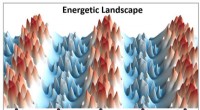
It's important to note that these units represent statistical measures of the surface profile. They don't capture the entire complexity of surface topography, which can also include factors like waviness, lay, and texture.
For a more comprehensive understanding of surface roughness, it's often helpful to use 3D surface measurement techniques and to consider these additional factors.