Density of Solids:
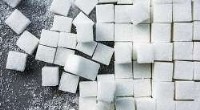
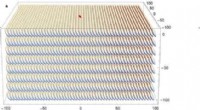
* Closely packed particles: The particles in a solid are tightly packed together, with very little space between them.
* Fixed positions: The particles in a solid vibrate in place, but they don't move freely. This fixed position contributes to the high density.
* High density: Due to the close packing and fixed positions, solids have a high density. This means they have a large amount of mass packed into a small volume.
Density of Gases:
* Widely spaced particles: The particles in a gas are far apart, with a large amount of space between them.
* Free movement: Gas particles move randomly in all directions, colliding with each other and the container walls.
* Low density: The large spacing between particles makes gases much less dense than solids. This means they have a small amount of mass packed into a large volume.
Here's a table summarizing the key differences:
| Feature | Solid | Gas |
|-----------------|--------------|---------------|
| Particle spacing | Closely packed | Widely spaced |
| Particle movement | Vibrate in place | Move randomly |
| Density | High | Low |
In addition to the above:
* Compressibility: Gases are highly compressible, meaning their volume can be easily reduced by applying pressure. Solids are much less compressible.
* Shape: Solids have a fixed shape, while gases take the shape of their container.
Examples:
* Solid: A block of iron is very dense.
* Gas: Air is a gas with a low density.
In summary: The difference in density between solids and gases comes from the fundamental difference in how their particles are arranged and move. This difference leads to a variety of other contrasting properties, such as compressibility and shape.