Condensation:
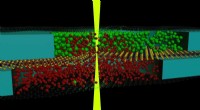
* Definition: The process where a gas changes into a liquid.
* Mechanism: When a gas cools down, its molecules slow down and lose energy. This causes them to come closer together, forming a liquid.
* Example: Dew forming on grass in the morning, water droplets forming on a cold glass of water.
Vaporization (Evaporation & Boiling):
* Definition: The process where a liquid changes into a gas.
* Mechanism: When a liquid gains energy (from heat), its molecules move faster and break apart, becoming a gas.
* Evaporation: Occurs at the surface of a liquid at any temperature.
* Boiling: Occurs when the liquid reaches its boiling point, where vaporization occurs throughout the liquid.
* Example: Water boiling in a pot, a puddle drying up in the sun.
Key differences:
* Direction of change: Condensation is gas to liquid, while vaporization is liquid to gas.
* Energy change: Condensation releases energy (exothermic), while vaporization requires energy (endothermic).
* Temperature: Condensation typically occurs when the temperature decreases, while vaporization occurs when the temperature increases.
* Location: Condensation can occur on a surface, while vaporization occurs at the surface or throughout the liquid.
Here's a simple way to remember:
Condensation: Think of Cold, Closer, Changing to liquid.
Vaporization: Think of Varm, Vapor, Vaporizing to gas.