How Lasers Work:
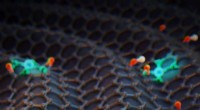
1. Excited Atoms: Lasers rely on the principle of "stimulated emission." Atoms are excited to higher energy levels, usually by external energy sources like light or electric current.
2. Stimulated Emission: When an excited atom is stimulated by a photon of light with the exact energy difference between its excited and ground state, it releases a photon that is identical to the stimulating photon.
3. Cascading Effect: This stimulated emission triggers a chain reaction, creating a cascade of identical photons, all traveling in the same direction and with the same wavelength. This forms the coherent light beam characteristic of lasers.
Types of Lasers:
* Gas Lasers: Use a mixture of gases, and the atoms in the gas are excited by electrical discharge. (Examples: HeNe laser, CO2 laser)
* Solid-State Lasers: Use a solid crystalline or glass material with atoms that can be excited. (Examples: Nd:YAG laser, Ruby laser)
* Semiconductor Lasers: Use a semiconductor material where electrons are excited across an energy gap. (Examples: Laser diodes, laser pointers)
In summary:
Atoms are the foundation of lasers. They store energy in excited states and release it as light photons when stimulated. The ability to control this process allows for the creation of highly focused, coherent light beams with specific wavelengths, used in a wide range of applications.