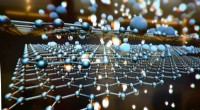
* Solids: The particles in solids are tightly packed and have a fixed, rigid structure. They have strong intermolecular forces that hold them in place, making them resistant to changes in shape.
* Liquids: While liquids have a definite volume, their particles are more loosely packed and can slide past each other. This allows them to flow and take the shape of their container, making them easier to deform than solids.
* Gases: Gases have very weak intermolecular forces and their particles are widely spaced. They have no fixed shape or volume and can easily be compressed or expanded, making them the easiest to deform.
Think of it this way:
* Imagine a brick (solid): It's difficult to change its shape by pushing or pulling on it.
* Imagine water (liquid): You can pour it into a different container and it takes the new shape.
* Imagine air (gas): You can easily compress it into a smaller space (like filling a balloon).