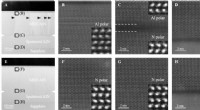
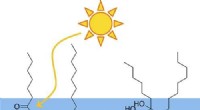
* Solid: In a solid, atoms are tightly packed in a regular, repeating pattern called a lattice. They vibrate in place, but don't have much freedom to move around. This gives solids their fixed shape and volume.
* Liquid: In a liquid, the atoms have more energy and are less tightly packed. They can move around more freely, sliding past each other. This makes liquids have a fixed volume, but they can take the shape of their container.
The key is the energy:
* Adding heat to a solid provides energy to the atoms. This energy makes them vibrate more intensely.
* Eventually, the atoms have enough energy to break free from their fixed positions in the lattice. They can now move around more freely, and the substance transitions from solid to liquid.
Think of it like this:
Imagine a group of people standing close together, all holding hands (solid). As they get more excited (heat), they start to move around more, bumping into each other and letting go of hands (liquid). The people themselves haven't changed, it's their movement and spacing that's different.
Important note: The atoms themselves do not change during this process. They are still the same type of atom, just arranged and moving differently.