Here's a breakdown:
* Deuterium-Tritium (D-T) fusion: This is the most common reaction used in research and is considered the most likely for future power plants. It requires a temperature of around 150 million degrees Celsius.
* Other fusion reactions: Other reactions, like those involving deuterium-deuterium (D-D) or helium-3, require even higher temperatures.
Why such high temperatures?
* Electrostatic repulsion: Atomic nuclei have a positive charge, repelling each other due to the electromagnetic force. This repulsion is very strong at close distances.
* Kinetic energy: To overcome the electrostatic repulsion, the nuclei need enough kinetic energy to get close enough to interact. This kinetic energy is directly related to temperature.
* Quantum tunneling: At these high temperatures, some nuclei can overcome the electrostatic barrier through a quantum phenomenon called tunneling.
Achieving these temperatures:
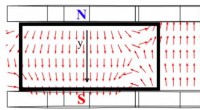
* Magnetic confinement fusion: This approach uses strong magnetic fields to confine the hot, ionized gas (plasma) away from the walls of the reactor.
* Inertial confinement fusion: This approach uses lasers or particle beams to compress and heat a target containing fusion fuel, creating extremely high temperatures and densities.
It's important to note that these temperatures are only required within the core of the fusion reaction. The surrounding environment can be much cooler.