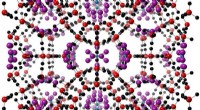
1. Definite shape and volume:
- Solids maintain a fixed shape and volume, regardless of the container they are in.
- This is because the particles within a solid are closely packed and held together by strong intermolecular forces.
2. Incompressibility:
- Solids are difficult to compress because the particles are already tightly packed, leaving very little space for further squeezing.
3. Rigidity:
- Solids resist deformation and maintain their shape due to the strong forces holding their particles in a fixed arrangement.
4. High density:
- Solids generally have high densities due to the close packing of their constituent particles.
5. Thermal expansion:
- Solids expand slightly when heated, as the increased kinetic energy of the particles causes them to vibrate more vigorously, increasing the average distance between them.
6. Vibrational motion:
- Particles in a solid are constantly vibrating about their fixed positions, although the amplitude of these vibrations is small.
7. Crystalline and amorphous structures:
- Solids can be classified into two main categories:
- Crystalline solids: Have a highly ordered, repeating arrangement of particles, forming a crystal lattice. Examples include salt, diamond, and ice.
- Amorphous solids: Lack a regular, repeating arrangement of particles. Examples include glass, rubber, and plastic.
8. Other characteristics:
- Solids can exhibit a range of other properties, including hardness, elasticity, malleability, and ductility, which depend on the specific type of solid and its internal structure.
Note: These are the general characteristics of solid matter. There are exceptions, such as very high pressure or temperature conditions, which can cause solids to behave like liquids or gases.