1. Loss of Energy: As a liquid cools, its atoms lose kinetic energy. This means they move slower and vibrate less vigorously.
2. Decreased Spacing: With less energy, the attractive forces between atoms become more dominant. The atoms begin to pack closer together.
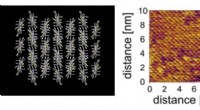
3. Formation of a Crystal Lattice: In most cases, as the liquid continues to cool, the atoms arrange themselves into a highly ordered, repeating three-dimensional pattern called a crystal lattice. This structure minimizes the potential energy of the system.
4. Reduced Freedom of Movement: In a solid, the atoms are essentially locked into place within the crystal lattice. They can still vibrate, but they can't move freely from one location to another. This is what gives solids their rigidity and fixed shape.
Important Notes:
* Not all liquids freeze into crystalline solids. Some substances, like glass, form amorphous solids where the atoms are arranged in a more random, disordered way.
* Freezing point: The specific temperature at which a liquid freezes is called its freezing point. This point depends on the substance and the pressure.
* Phase Change: The process of a liquid turning into a solid is a phase change, and it involves a change in the state of matter.
In Summary: Freezing is a process where atoms in a liquid lose energy, pack closer together, and form a more ordered structure, resulting in a solid state.