Here's how it works:
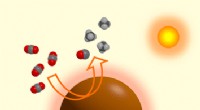
* Heating: When a fluid (gas or liquid) is heated, its particles move faster and spread further apart, making it less dense.
* Rising: The less dense, warmer fluid rises.
* Cooling: As the warmer fluid rises, it cools, becoming denser.
* Sinking: The cooler, denser fluid sinks back down.
* Cycle: This cycle of rising and sinking creates a circular flow, which is called convection.
Examples of Convection:
* Boiling Water: The heat from the stove causes the water at the bottom of the pot to heat up and rise, while cooler water sinks down to take its place.
* Weather: Warm air rises, creating low pressure areas, while cooler air sinks, creating high pressure areas. This difference in pressure drives winds and weather patterns.
* Earth's Mantle: Heat from the Earth's core creates convection currents in the mantle, which are responsible for plate tectonics.
Convection is a fundamental process in many natural systems, and it's essential for transferring heat and energy.