Liquids:
* Particles are close together but can move around: Unlike solids, where particles are tightly packed and fixed in position, liquid particles have more freedom to move. They're still close enough to exert attractive forces on each other, but these forces are weaker than in solids.
* Fluid nature: This freedom of movement allows liquid particles to easily slide past each other, giving liquids their characteristic fluidity. They can take the shape of their container because their particles can flow to fill the available space.
* Viscosity: Liquids do have some resistance to flow, which is called viscosity. This is due to the attractive forces between particles, which slightly resist their movement. Thicker liquids have higher viscosity than thinner liquids.
Solids:
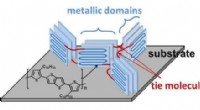
* Particles are tightly packed and fixed in position: Solid particles are held in a rigid, ordered structure by strong attractive forces. They vibrate in place but don't move around freely.
* Definite shape: Due to the fixed arrangement of particles, solids have a definite shape and volume. They resist any attempt to change their shape, making them appear rigid.
* Crystalline vs. Amorphous: Solids can be crystalline, where particles are arranged in a regular, repeating pattern (like salt), or amorphous, where particles are arranged randomly (like glass).
In summary:
Liquids flow easily because their particles can move past each other due to weaker attractive forces and more freedom of movement. Solids, on the other hand, are rigid because their particles are fixed in position by strong attractive forces.