What is neon?
* Neon is a chemical element, represented by the symbol "Ne".
* It's a colorless, odorless, inert gas.
* It's found in trace amounts in the Earth's atmosphere.
* It's famous for its bright, reddish-orange glow when electricity passes through it, which is why it's used in neon signs.
What is a neon atom?
* An atom is the basic building block of all matter.
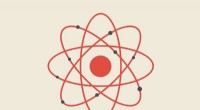
* A neon atom consists of a central nucleus surrounded by electrons.
* Nucleus:
* Contains protons (positively charged particles) and neutrons (no charge).
* Neon has 10 protons, which defines it as neon. The number of protons in an atom is its atomic number.
* The number of neutrons can vary slightly, creating isotopes of neon.
* Electrons:
* Negatively charged particles orbiting the nucleus in specific energy levels or shells.
* Neon has 10 electrons to balance out the 10 protons.
Key Properties of Neon Atoms:
* Inert: Neon atoms have a full outer electron shell, making them very stable and unreactive.
* Small size: Neon atoms are relatively small compared to many other atoms.
* Low boiling point: Neon has a very low boiling point (-246°C), meaning it exists as a gas at room temperature.
Uses of Neon:
* Neon signs: The most common use, due to the bright glow produced when electricity passes through it.
* Lasers: Used in some types of lasers.
* Refrigeration: Neon can be used as a refrigerant due to its low boiling point.
In summary, a neon atom is the smallest unit of the element neon, containing 10 protons, 10 electrons, and a varying number of neutrons. Its inert nature and unique properties make it valuable in various applications.