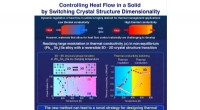
* Thermal conductivity measures how well a material conducts heat. It depends on the structure and movement of electrons within the material.
* Melting point indicates the temperature at which a solid material transitions to a liquid. It primarily depends on the strength of the bonds between atoms or molecules in the material.
Examples:
* Diamond: A very good heat conductor (highest among all known materials) but also has a very high melting point (3550°C).
* Copper: Excellent heat conductor, but its melting point (1084°C) is relatively lower compared to diamond.
* Graphite: Good heat conductor in one direction (along the layers), but its melting point (3577°C) is comparable to diamond.
* Quartz: Poor heat conductor but has a high melting point (1713°C).
In summary:
* Some materials like diamond exhibit both high thermal conductivity and high melting point, but this is not always the case.
* Other factors like atomic structure, bonding, and electron movement play a role in determining both properties.
Therefore, a material with a high melting point might be a good heat conductor, but it's not guaranteed. You need to consider both properties separately.