However, there are a few situations where it might *appear* like liquids are forming layers:
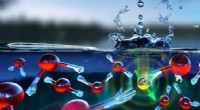
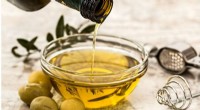
* Density Differences: If two liquids have significantly different densities, the denser liquid will sink to the bottom, creating a visual separation. This is the classic example of oil and water – oil is less dense than water, so it floats on top.
* Immiscible Liquids: Some liquids are immiscible, meaning they don't mix. For example, oil and vinegar are immiscible. They'll form distinct layers because their molecules don't interact with each other.
* Sedimentation: If a liquid contains suspended particles, the particles will eventually settle to the bottom due to gravity, creating a layered appearance. This is how sediment forms at the bottom of a lake or river.
Important Note: Even when liquids form layers, the separation is not always perfect. There can be some mixing or diffusion at the interface between the layers.
Here's a breakdown of the key concepts:
* Miscible: Liquids that can mix together in any proportion.
* Immiscible: Liquids that cannot mix together.
* Density: A measure of how much mass is contained in a given volume.
* Sedimentation: The process of particles settling to the bottom of a liquid.
I hope this explanation is helpful!