Here's a breakdown:
* Solid: In a solid, molecules are tightly packed and have a fixed shape and volume.
* Gas: In a gas, molecules are widely spaced and move freely, taking the shape and volume of their container.
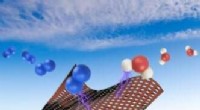
During sublimation, the molecules in a solid gain enough energy to overcome the forces holding them together, transitioning directly into a gaseous state without passing through the liquid phase.
Examples of sublimation:
* Dry ice (solid carbon dioxide) sublimates into carbon dioxide gas at room temperature.
* Napthalene mothballs gradually disappear through sublimation.
* Frozen water (ice) can sublimate under low pressure and low temperatures.
Let me know if you'd like to learn more about the process of sublimation!