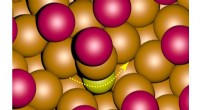
* Spacing of molecules: In gases, molecules are widely spaced and move freely. This means there's a lot of empty space between the molecules. In liquids, molecules are closer together, and in solids, they are tightly packed.
* Intermolecular forces: The forces of attraction between molecules (intermolecular forces) are much weaker in gases than in liquids or solids. This allows gas molecules to move around more freely and occupy a larger volume.
Density is defined as mass per unit volume:
* Gases: The low density of gases is due to the large volume they occupy for a given mass, because of the spacing between molecules.
* Liquids and Solids: The higher density of liquids and solids is because the molecules are packed much closer together, leading to a smaller volume for a given mass.
Example:
Imagine a balloon filled with air. The air inside the balloon is a gas. Now imagine squeezing the balloon. The air molecules are forced closer together, increasing the density. This demonstrates how changing the spacing between molecules directly affects density.
In summary: The difference in density between gases, liquids, and solids at the same temperature is primarily due to the different spacing and arrangement of molecules in each state.