Thermal expansion refers to the tendency of matter to change its volume in response to temperature changes. This phenomenon occurs due to the increased kinetic energy of the constituent particles (atoms, molecules) within the material.
Here's a breakdown of thermal expansion in solids and gases:
Solids:
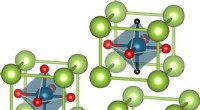
* Mechanism: In solids, the atoms are tightly packed in a regular lattice structure. As temperature increases, the atoms vibrate more vigorously. This increased vibration causes the average distance between atoms to slightly increase, resulting in an overall expansion of the solid.
* Types:
* Linear Expansion: Expansion in one dimension, e.g., the length of a metal rod.
* Area Expansion: Expansion in two dimensions, e.g., the surface area of a metal plate.
* Volume Expansion: Expansion in three dimensions, e.g., the volume of a metal cube.
* Factors Affecting Expansion:
* Material Type: Different materials have different coefficients of thermal expansion. Steel expands more than copper for the same temperature change.
* Temperature Change: The greater the temperature change, the greater the expansion.
* Initial Dimensions: Larger initial dimensions lead to larger expansion.
Gases:
* Mechanism: Gas molecules are much farther apart than in solids, and they move freely and randomly. As temperature increases, the gas molecules move faster and collide with the container walls more frequently and with greater force. This increased pressure leads to an expansion of the gas volume.
* Types:
* Volume Expansion: Gases experience only volume expansion.
* Factors Affecting Expansion:
* Pressure: The pressure of the gas affects its expansion. At constant pressure, the volume increases proportionally to temperature.
* Temperature Change: As with solids, a greater temperature change leads to a larger volume expansion.
* Volume: Larger initial volume leads to a larger volume expansion.
Key Differences:
* Magnitude: Gases experience much larger thermal expansion than solids for the same temperature change.
* Shape: Gases expand in all directions, while solids may expand linearly, area-wise, or volumetrically.
* Pressure: Pressure plays a significant role in gas expansion but is negligible in solids.
Applications:
* Thermometers: Thermal expansion is utilized in thermometers to measure temperature.
* Bimetallic Strips: These strips are made of two different metals with different coefficients of expansion. The differential expansion is used in thermostats and other temperature-sensitive devices.
* Bridges and Buildings: Thermal expansion is considered in the design of bridges and buildings to account for changes in length due to temperature fluctuations.
In summary, thermal expansion is a fundamental property of matter that is influenced by the type of material, temperature changes, and other factors. Understanding this phenomenon is crucial in various applications, from everyday objects to complex engineering structures.