Solids:
* Regular shapes: If the solid has a regular shape (cube, sphere, cylinder, etc.), you can use a formula based on its dimensions.
* Cube: Volume = side x side x side
* Sphere: Volume = (4/3) x π x radius³
* Cylinder: Volume = π x radius² x height
* Irregular shapes:
* Water displacement: Submerge the object in a graduated cylinder filled with water. The difference in water level before and after submersion equals the object's volume.
* Measurement tools: Use calipers or a measuring tape to determine the object's dimensions and calculate its volume using appropriate formulas.
Liquids:
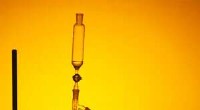
* Graduated cylinder: Pour the liquid into a graduated cylinder and read the volume indicated on the cylinder's markings.
* Measuring cup: Similar to a graduated cylinder, measuring cups are marked with volume increments.
* Beaker: Beakers have markings on the side, though they are generally less precise than graduated cylinders.
Gases:
* Ideal Gas Law: Use the formula PV = nRT, where:
* P = Pressure
* V = Volume
* n = Number of moles
* R = Ideal gas constant
* T = Temperature
* Measuring container: If the gas is contained in a closed vessel, you can measure the volume of the vessel.
Important Considerations:
* Units: Always use consistent units for your measurements. For example, if you measure length in centimeters, volume will be in cubic centimeters (cm³).
* Precision: The accuracy of your volume measurement depends on the precision of your measuring tools.
* Density: You can calculate the volume of a substance if you know its mass and density using the formula: Volume = Mass / Density.
Let me know if you'd like more detailed information on any specific method!