1. Thermal Expansion:
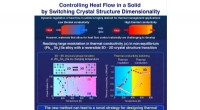
* Solids: When a solid is heated, its molecules vibrate more vigorously, increasing the average distance between them. This leads to an expansion in volume, while the mass remains constant. Since density is mass per unit volume, the density decreases with increasing temperature.
* Liquids: Similar to solids, liquids also expand upon heating. However, the expansion in liquids is generally greater than in solids due to the weaker intermolecular forces. This results in a more significant decrease in density with increasing temperature.
* Gases: Gases are highly compressible and have large intermolecular distances. When heated, gas molecules move faster and collide more frequently, leading to a substantial increase in volume. This results in a significant decrease in density with increasing temperature.
2. Changes in Intermolecular Forces:
* Liquids: As temperature increases, the kinetic energy of molecules overcomes the intermolecular forces holding them together. This weakens the attractive forces, causing molecules to move further apart and reducing density.
* Gases: In gases, the intermolecular forces are already weak. However, temperature affects the frequency and strength of collisions between molecules, which indirectly influences the density.
3. Phase Transitions:
* When a substance changes phase (solid to liquid, liquid to gas), its density changes dramatically. This is because the arrangement and spacing of molecules are significantly different in each phase.
In summary:
The density of a substance changes with temperature because of thermal expansion, which alters the volume of the substance while keeping the mass constant. This is influenced by the strength of intermolecular forces and the specific phase of the substance.
Note: There are some exceptions to this general trend, such as water between 0°C and 4°C, where the density increases with temperature due to the unique structure of water molecules.