Here's how it works:
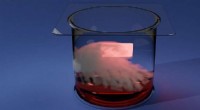
* Heating: The gas or liquid is heated in one area. This causes the molecules to move faster and spread out, making it less dense.
* Rising: The less dense, warmer fluid rises, similar to a hot air balloon.
* Cooling: As the fluid rises, it cools and becomes denser.
* Sinking: The cooled, denser fluid sinks, creating a circular flow pattern.
Examples of convection:
* Boiling water: Heat from the bottom of the pot causes water to rise, while cooler water sinks to take its place.
* Wind: Uneven heating of the Earth's surface causes air to rise in some places and sink in others, creating winds.
* Ocean currents: Differences in water temperature and salinity create currents that circulate around the globe.
Convection is a very important process for transferring heat in many natural and man-made systems.