Here's why:
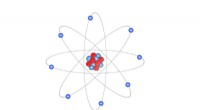
* Protons: Protons determine the atomic number of an element and define its identity. They reside in the nucleus of an atom and contribute to the atom's positive charge.
* Valence Electrons: These are the electrons in the outermost shell of an atom. They are the ones involved in chemical bonding.
The number of valence electrons is determined by the element's position on the periodic table, specifically its group number. For example, elements in group 1 (alkali metals) have 1 valence electron, while elements in group 17 (halogens) have 7 valence electrons.
Here's an example:
* Sodium (Na): Sodium has 11 protons (atomic number 11) and 1 valence electron.
* Chlorine (Cl): Chlorine has 17 protons (atomic number 17) and 7 valence electrons.
In summary: The number of protons defines the element, while the number of valence electrons determines its chemical behavior.