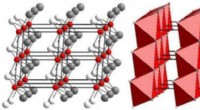
Fe3O4 is a mixed-valence compound. This means it contains iron atoms in more than one oxidation state. Specifically, it contains both Fe2+ and Fe3+ ions.
Here's how the formula works:
* Imagine the compound as a combination of two simpler oxides: FeO (ferrous oxide) and Fe2O3 (ferric oxide).
* The actual formula is a combination of these: FeO·Fe2O3. This represents one Fe2+ ion and two Fe3+ ions for a total of three iron atoms.
* Simplifying the formula: Combining the oxides gives Fe3O4.
In summary: The formula Fe3O4 represents a compound where iron exists in both +2 and +3 oxidation states. This allows the compound to be electrically neutral, despite the seemingly unusual combination of valencies.