1. Catalytically:
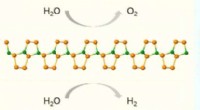
* Enzymes: The most common way in biological systems is through the enzyme catalase, which is found in most living organisms. Catalase accelerates the decomposition of hydrogen peroxide into water (H₂O) and oxygen (O₂):
2 H₂O₂ → 2 H₂O + O₂
* Metal ions: Certain metal ions, like iron (Fe²⁺) and manganese (Mn²⁺), can also catalyze the decomposition of hydrogen peroxide. This is why hydrogen peroxide solutions should be stored in dark, opaque bottles, as light can accelerate the decomposition process in the presence of these metal ions.
2. Thermally:
* Heat: Hydrogen peroxide can also decompose into water and oxygen when heated to a sufficiently high temperature. This process is typically slower than enzymatic or catalytic decomposition.
3. Photochemically:
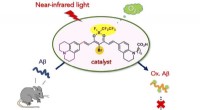
* Light: Exposure to ultraviolet (UV) light can also cause the decomposition of hydrogen peroxide.
Overall, the decomposition of hydrogen peroxide is a relatively straightforward process, resulting in the formation of water and oxygen. The specific mechanism and speed of the process are influenced by factors like the presence of catalysts, temperature, and light exposure.