1. Energy Barrier:
* Chemical reactions require energy to overcome the energy barrier between reactants and products.
* The activated complex represents this energy barrier, the point where the bonds in reactants are breaking, and new bonds in products are forming.
2. Unstable Intermediate:
* The activated complex is a very short-lived species, existing for only a fraction of a second.
* It is highly unstable and immediately breaks down into either reactants or products.
3. Reaction Rate Determination:
* The energy required to reach the activated complex determines the rate of the reaction.
* Reactions with higher activation energies are slower because fewer molecules have enough energy to reach the transition state.
4. Catalyst Influence:
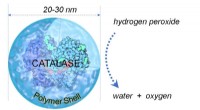
* Catalysts work by lowering the activation energy of a reaction.
* They do this by providing an alternative reaction pathway that involves a lower-energy activated complex, speeding up the reaction.
5. Visualization:
* Imagine a hill representing the energy barrier between reactants and products.
* The activated complex is the peak of the hill, the point where the energy is highest before the molecules can "roll down" to form products.
In summary:
The activated complex is a critical intermediate in chemical reactions. It represents the highest energy point along the reaction pathway, dictates the reaction rate, and is influenced by catalysts. Understanding the activated complex is crucial for comprehending the kinetics and mechanisms of chemical reactions.