Understanding Molecular Compounds
* Definition: Molecular compounds are formed when two or more nonmetals share electrons through covalent bonds.
* Characteristics:
* They generally have lower melting and boiling points compared to ionic compounds.
* They are often gases, liquids, or soft solids at room temperature.
* They tend to be poor conductors of electricity, both in their solid and liquid states.
Identifying Molecular Compounds
1. Examine the elements: If the compound is primarily composed of nonmetals (except for hydrogen, which can act as either a metal or a nonmetal depending on the compound), it's likely molecular.
2. Look for prefixes in the name: Molecular compounds use prefixes (mono-, di-, tri-, etc.) to indicate the number of atoms of each element in the molecule. For example, carbon dioxide (CO₂) has the prefix "di" to show two oxygen atoms.
3. Consider the type of bond: If the bond between the atoms is predominantly covalent (sharing electrons), it's a molecular compound.
Examples:
* Water (H₂O): Hydrogen and oxygen are both nonmetals, and the bonds are covalent.
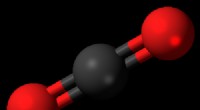
* Carbon dioxide (CO₂): Carbon and oxygen are nonmetals, and the name uses prefixes.
* Methane (CH₄): Carbon and hydrogen are nonmetals, and the bonds are covalent.
Exceptions:
* Some compounds containing metals can also be molecular, but this is less common. For example, mercury(II) chloride (HgCl₂) is molecular despite containing the metal mercury.
Key Points:
* While these methods are generally reliable, it's always best to consult a reliable source like a textbook or reputable website for specific compounds.
* If you're unsure, consider the compound's properties (melting point, conductivity) to help you classify it.