Liquid Water:
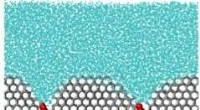
* Molecular Arrangement: Water molecules in liquid form are close together but can move around freely. They have a somewhat random, constantly shifting arrangement.
* Density: Water is denser than ice. This is why ice floats.
* Shape: Liquid water takes the shape of its container.
* Compressibility: Liquid water is relatively incompressible, meaning it resists changes in volume when pressure is applied.
* Movement: Water molecules in a liquid are constantly moving and colliding with each other. This movement is what gives water its fluidity.
Solid Ice:
* Molecular Arrangement: Water molecules in solid ice are arranged in a highly ordered, crystalline structure. They are locked into specific positions.
* Density: Ice is less dense than liquid water. This is why it floats.
* Shape: Solid ice has a fixed shape.
* Compressibility: Ice is relatively incompressible.
* Movement: Water molecules in ice are tightly packed and vibrate in place, but they cannot move freely.
Key Difference: The main difference between liquid water and solid ice is the degree of freedom of movement of the water molecules. In liquid water, the molecules have more freedom to move around, while in solid ice, they are locked into a fixed structure.
This difference in molecular arrangement explains why ice floats and why liquid water can flow.