Here's why:
* Exothermic Reaction: When SO₃ dissolves in water, it forms sulfuric acid in a strongly exothermic reaction. The heat generated can cause the water to boil violently, potentially causing splashes and burns.
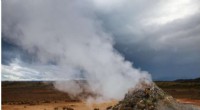
* Formation of Sulfuric Acid Mist: The heat released can also cause some of the sulfuric acid to vaporize, forming a corrosive mist that is dangerous to inhale.
* Safety Concerns: Direct dissolution of SO₃ in water is considered highly dangerous and is not a safe or practical way to produce sulfuric acid.
Instead, a safer and more controlled method is used:
* Absorption in Concentrated Sulfuric Acid: SO₃ is first dissolved in concentrated sulfuric acid, producing oleum, which is essentially a solution of SO₃ in H₂SO₄. This process is less exothermic and safer.
* Dilution with Water: The oleum is then carefully diluted with water, allowing the SO₃ to react with water to form H₂SO₄ in a controlled manner.
This method ensures that the heat generated is effectively managed, preventing potential hazards.
Therefore, directly dissolving SO₃ in water is avoided due to the exothermic nature of the reaction and the safety concerns it poses.