* Polarization: This refers to a distortion of the electron cloud in an atom or ion. It happens when an atom or ion is exposed to an electric field, such as when it's near another atom or ion with a different charge. This distortion can result in a temporary dipole moment, where one side of the atom or ion becomes slightly more positive and the other side becomes slightly more negative.
* Chloride ion: This is a negatively charged ion, denoted as Cl⁻. It is formed when a chlorine atom gains an electron.
Possible interpretations of "polarized chloride ion":
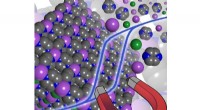
1. Polarization of a chloride ion by a nearby cation: When a chloride ion is near a positively charged cation (like Na⁺), the chloride ion's electron cloud will be pulled towards the cation. This results in a temporary dipole moment within the chloride ion, where the side closer to the cation becomes more electron-rich (slightly negative) and the opposite side becomes more electron-deficient (slightly positive). This effect is known as ionic polarization.
2. Chloride ion in a polar solvent: When a chloride ion is dissolved in a polar solvent like water, the solvent molecules can interact with the chloride ion through dipole-ion interactions. This can lead to a temporary distortion of the chloride ion's electron cloud, making it slightly polarized.
It's important to remember that the chloride ion itself is not "polarized" in the sense that it permanently gains a positive or negative charge. The polarization effects are temporary and result from interactions with other charged species.
If you could provide more context or a specific example, I might be able to provide a more specific answer.