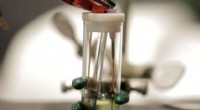
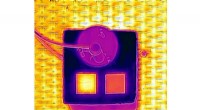
1. Heat Loss/Gain:
* Insulation: The calorimeter used is rarely perfectly insulated, allowing heat exchange with the surroundings. This can lead to an inaccurate measurement of the temperature change.
* Heat Capacity of the Calorimeter: The calorimeter itself absorbs some heat during the reaction, affecting the final temperature reading. This effect is often ignored, leading to error.
* Stirring: Vigorous stirring can introduce heat from friction, influencing the temperature reading.
2. Measurement Errors:
* Temperature Readings: Thermometers have limitations in accuracy, and reading them precisely can be challenging.
* Mass Measurement: The accuracy of the balance used to weigh the chemicals directly affects the calculated enthalpy change.
* Volume Measurement: If the volume of water used is not measured accurately, the calculated enthalpy change will be affected.
3. Dissolution Process:
* Incomplete Dissolution: If the copper(II) sulfate pentahydrate does not fully dissolve, the enthalpy change measured will be lower than the true value.
* Heat of Solution: The enthalpy change of hydration is a specific value, but the experiment measures the overall heat change, including the heat of solution of copper(II) sulfate. This introduces an error if the heat of solution is not accounted for.
* Side Reactions: Some copper(II) sulfate pentahydrate might react with the water, leading to a side reaction and affecting the observed enthalpy change.
4. Assumptions and Approximations:
* Constant Specific Heat Capacity: The experiment often assumes the specific heat capacity of the solution is constant, which is an approximation. The specific heat capacity can vary slightly depending on the concentration of the solution.
* Ideal Conditions: The calculation assumes ideal conditions, neglecting factors like heat loss, incomplete dissolution, and side reactions.
5. Other Factors:
* Purity of Chemicals: Impurities in the chemicals can significantly affect the reaction and enthalpy change.
* Air Bubbles: If air bubbles are trapped in the calorimeter, they can interfere with heat transfer and affect the temperature readings.
Minimizing Errors:
* Improve Insulation: Use a well-insulated calorimeter or perform the experiment in a controlled environment.
* Account for Heat Capacity: Use a correction factor for the heat capacity of the calorimeter.
* Calibrate Equipment: Calibrate the thermometer and balance to ensure accurate readings.
* Ensure Complete Dissolution: Use sufficient water and stir well to ensure the copper(II) sulfate pentahydrate dissolves completely.
* Control Stirring: Use a consistent stirring rate throughout the experiment to minimize friction heat.
* Use High-Purity Chemicals: Ensure the chemicals used are of high purity to reduce the impact of impurities.
By understanding the potential sources of error and implementing appropriate techniques to minimize them, you can obtain more accurate and reliable results for the enthalpy change of hydration of copper(II) sulfate pentahydrate.