Here's why:
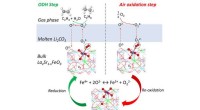
* Chemical bonds are broken and formed: Chemical reactions involve the breaking and reforming of chemical bonds between atoms. This alters the arrangement of atoms and the forces between them, leading to changes in physical and chemical properties.
* New substances are created: The products of a reaction are entirely new substances with different chemical compositions and structures compared to the reactants. This change in composition directly impacts their properties.
Examples:
* Burning wood: Wood (reactant) is composed of organic compounds. When burned (reaction with oxygen), it produces ash (product), carbon dioxide (product), water (product), and heat (energy release). Ash, carbon dioxide, and water have entirely different properties than wood.
* Baking soda and vinegar: When you mix baking soda (sodium bicarbonate) and vinegar (acetic acid), they react to produce carbon dioxide (gas bubbles), water, and sodium acetate. This is a clear example of how the products (gas bubbles, water, and sodium acetate) have very different properties than the reactants (baking soda and vinegar).
Important Note: There are a few exceptions, like reversible reactions where the products can react to form the original reactants, but in most cases, the products of a chemical reaction will have distinct properties from the starting materials.