Understanding the Problem
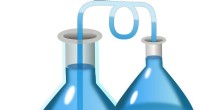
* Mass Conservation: The total mass of the reactants (A and B) must equal the total mass of the products.
* Gas Production: The fact that a gas is produced means some of the mass of the reactants has been converted into a gaseous form, which escapes into the atmosphere.
Calculations
1. Total Reactant Mass: 60 g (A) + 40 g (B) = 100 g
2. Missing Mass: 100 g (reactants) - 85 g (mixture) = 15 g
3. Conclusion: 15 g of the reactants were converted into a gas that escaped.
Important Note: We can't determine the exact chemical products without more information about the specific reaction between A and B. The missing 15 g could be due to a variety of gases being produced.
Example Scenario
Let's imagine a hypothetical reaction:
* A: Sodium bicarbonate (NaHCO3) - Baking soda
* B: Vinegar (acetic acid, CH3COOH)
This reaction produces carbon dioxide gas (CO2), water (H2O), and sodium acetate (NaC2H3O2). The 15 g missing would likely be due to the carbon dioxide gas escaping.
To Solve This Completely
You'd need more information, such as:
* The identities of substances A and B: This is crucial to know the chemical reaction that occurs.
* The balanced chemical equation: This will show the exact ratio of reactants and products.
Let me know if you have more details about the reaction, and I can help you figure out the specific products!