* Elements are the most fundamental building blocks of matter. They cannot be broken down into simpler substances by chemical means. Each element is defined by the number of protons in its atom's nucleus (its atomic number).
* Atoms are the smallest unit of an element. They consist of a nucleus containing protons and neutrons, surrounded by electrons.
What you might be thinking of is:
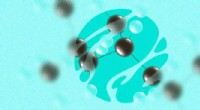
* Diatomic molecules: These are molecules formed by two atoms of the same element bonded together. Common examples include:
* Oxygen (O2): The oxygen we breathe.
* Nitrogen (N2): The most abundant gas in the atmosphere.
* Hydrogen (H2): A very reactive element.
* Chlorine (Cl2): A greenish-yellow gas.
* Bromine (Br2): A reddish-brown liquid.
* Iodine (I2): A purple solid.
* Fluorine (F2): A highly reactive, pale yellow gas.
* Polyatomic ions: These are ions (charged particles) made up of two or more atoms bonded together. Examples include:
* Sulfate (SO4^2-): Found in many minerals and acids.
* Nitrate (NO3^-): Found in fertilizers and explosives.
* Carbonate (CO3^2-): Found in limestone and baking soda.
Let me know if you'd like to know more about diatomic molecules, polyatomic ions, or any other related topic!