Here's a breakdown:
* Elements: The simplest forms of matter that cannot be broken down further by chemical means. Examples include sodium (Na), chlorine (Cl), oxygen (O), and carbon (C).
* Compounds: Substances formed when two or more different elements chemically combine in a fixed ratio.
How Salts Form:
Salts are formed through a reaction called neutralization between an acid and a base.
* Acids contain hydrogen ions (H+) and release them into a solution.
* Bases contain hydroxide ions (OH-) and release them into a solution.
When an acid and a base react, the hydrogen ions from the acid combine with the hydroxide ions from the base to form water (H2O). The remaining ions from the acid and base then combine to form the salt.
Example:
* Sodium chloride (NaCl), commonly known as table salt, is formed when hydrochloric acid (HCl) reacts with sodium hydroxide (NaOH):
HCl (acid) + NaOH (base) → NaCl (salt) + H2O (water)
Key Points:
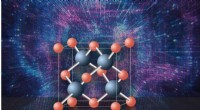
* Salts are ionic compounds, meaning they are held together by electrostatic attraction between positively charged ions (cations) and negatively charged ions (anions).
* The specific elements that make up a salt determine its properties, such as taste, solubility, and reactivity.